Was bleibt – Porträts im Hospiz
Seit Juli 2017 arbeitete ich am Langzeitprojekt „Was bleibt, Porträts im Hospiz“. Ich begegnete Menschen, die wussten, dass sie in naher Zukunft sterben würden. Was veränderte sich, wenn man wusste, dass man demnächst, nicht irgendwann, nicht mehr da sein würde?
Mit Unterstützung des Ricam Hospizes porträtierte und interviewte ich Patientinnen und Patienten des Hospizes in Berlin. Mir war es wichtig zu zeigen, wie individuell und unterschiedlich ihre Versuche waren, mit diesem Prozess zu leben und einen Alltag in dieser Situation zu gestalten.
What Remains – Portraits in the Hospice
From July 2017, I worked on the long-term project “What Remains, Portraits in the Hospice”. I met people who knew that they would die in the near future. What changed when you knew that you would no longer be there soon, rather than at some indefinite time?
With the support of Ricam Hospice, I photographed and interviewed patients at the hospice in Berlin. I wanted to show how individual and different their attempts were to live with this process and create an everyday life in this situation.
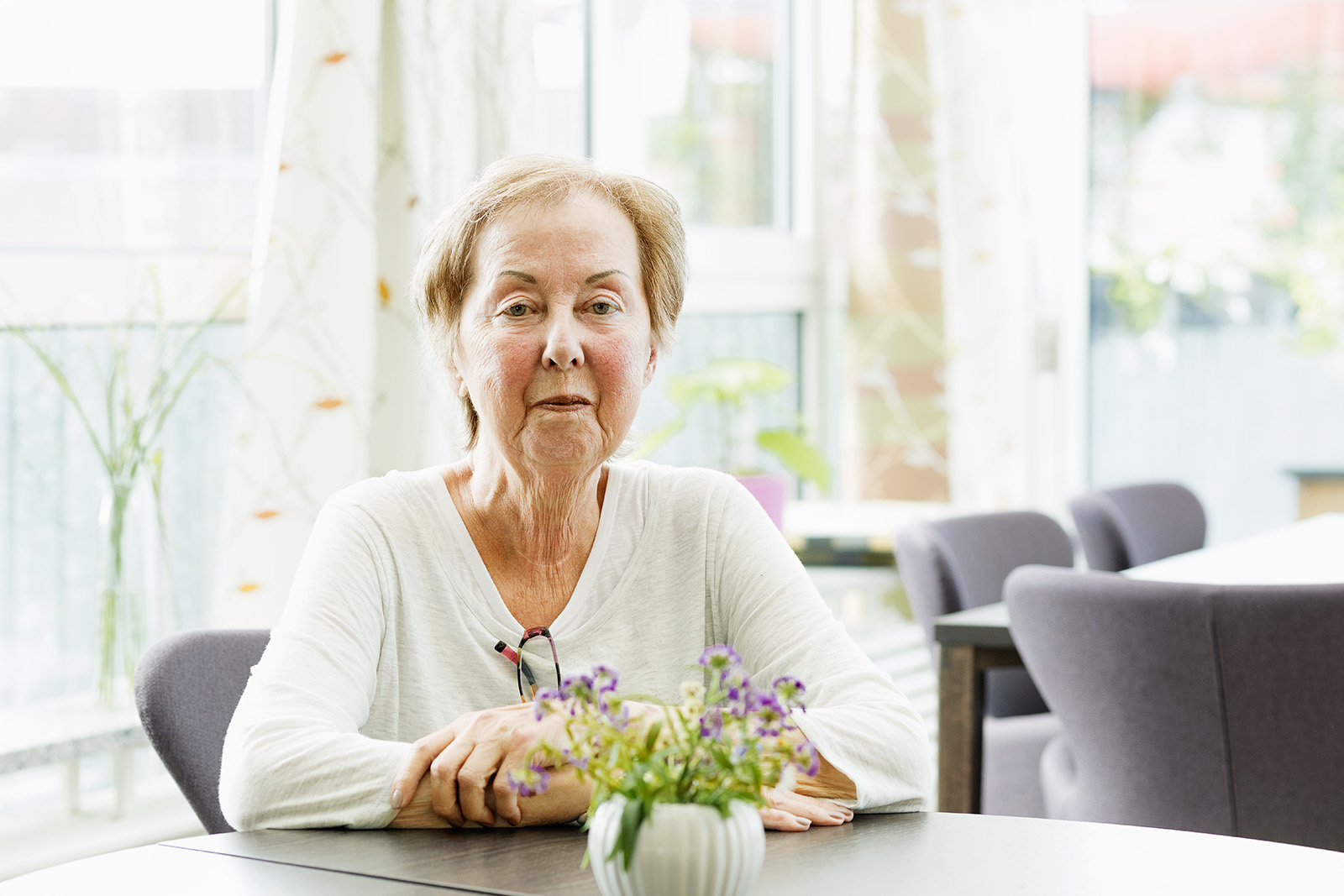
Manuela Winkel
Am meisten beschäftige ich mich mit mir selber, ich bin mir wichtig im Moment. Das ich für mein Wohlbefinden Sachen wahrnehme, das ist mir ganz wichtig. Und dann immer abgrenzen: Nee, damit willst Du nichts zu tun haben, das belastet dich, das willst du nicht mehr.
Mostly I’m concerned with myself. I matter to myself right now. It’s very important to me to notice what helps me feel well. And to keep setting boundaries: no, you don’t want anything to do with that. It weighs on you. You don’t want that any more.
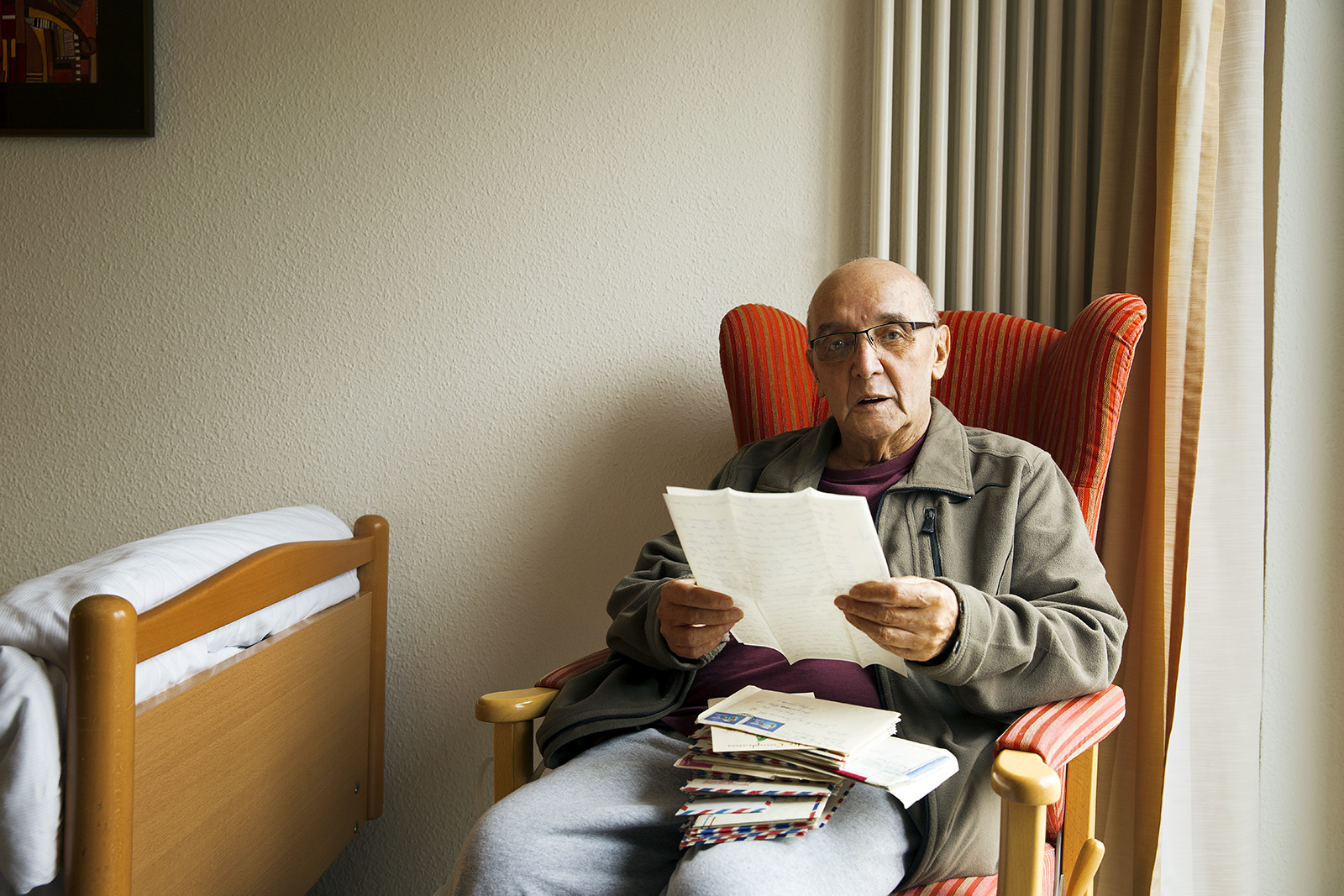
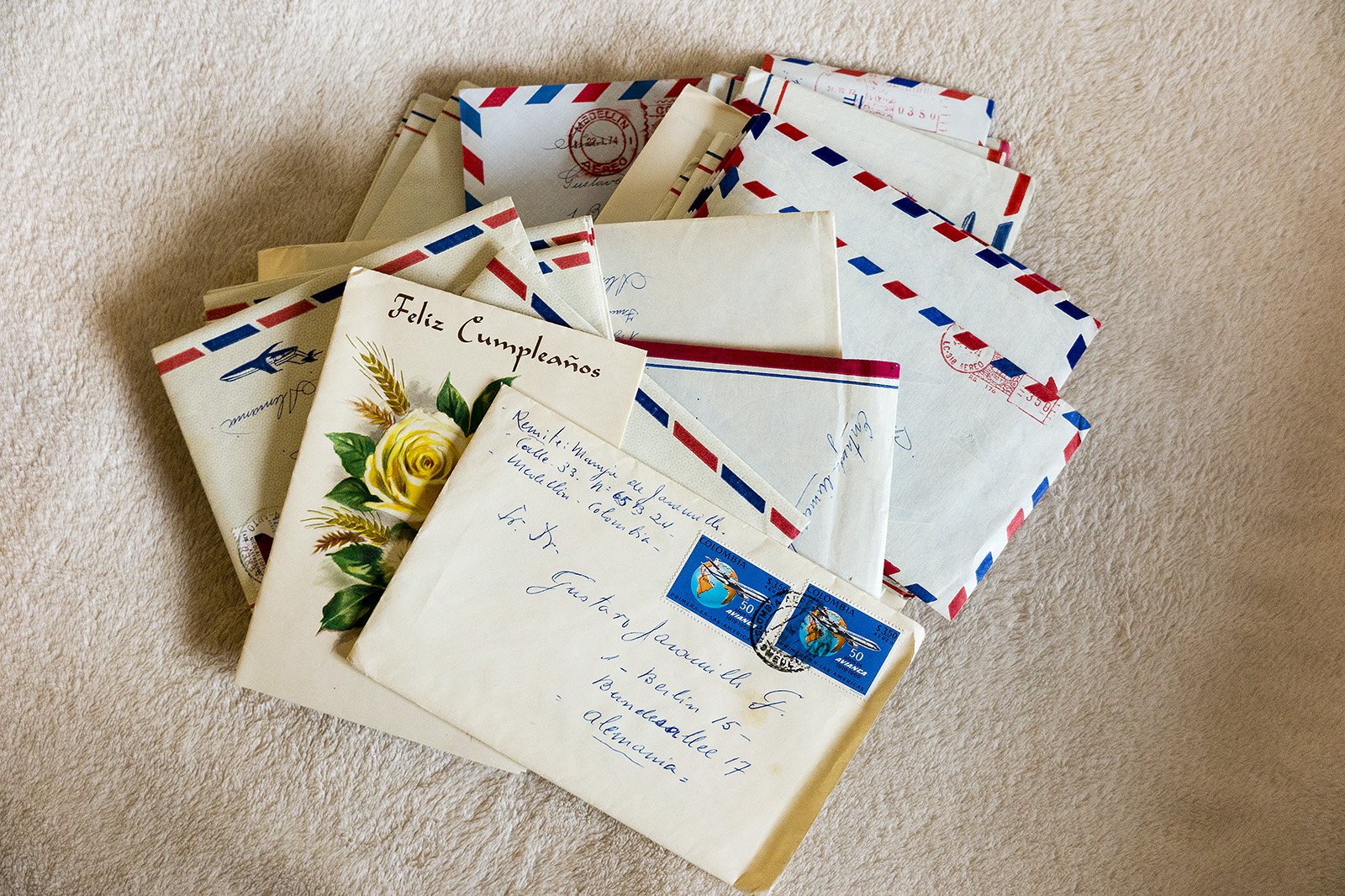
Gustafo Jaramillo Guzmann
Im Frühstücksaal treffe ich ein paar von den anderen Patienten und wir unterhalten uns über verschiedene Sachen, andere Patienten sind in sich und wollen nicht so gesprächig sein. Dann komme ich nach dem Frühstück in mein Zimmer und kann vormittags alte Briefe lesen und ich habe so einen Schredder, dann vernichte ich sie.
In the breakfast room I meet some of the other patients, and we talk about different things. Other patients keep to themselves and don’t feel like talking much. After breakfast I go back to my room, and in the morning I can read old letters. I have a shredder, and then I destroy them.
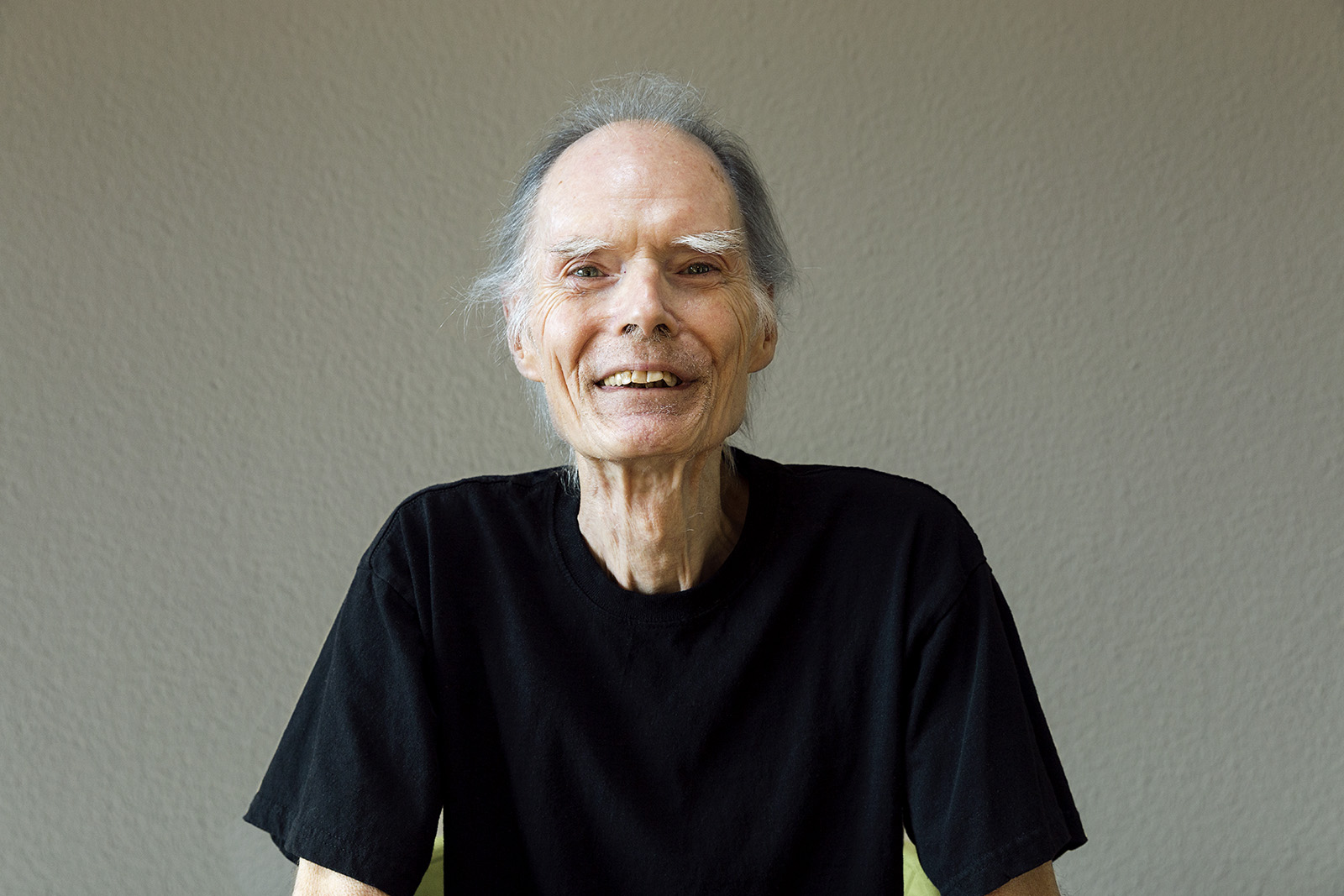
Udo Rauhut
Als ich erfahren habe, dass ich krebskrank bin und nicht mehr lange zu leben habe, war das für mich eigentlich eine Erleichterung, eher was positives, in dem Sinn, jetzt weiß ich, wie es geht, ich habe noch ein bisschen zu leben, viel nicht und da habe ich all das gelesen, was sich zu Hause bei mir angesammelt hat. Ich bin alleinstehend, hab keine Familie, keine Verwandten und habe alleinstehend immer das gemacht, was mich interessiert hat.
When I found out I had cancer and didn’t have long to live, it was actually a relief, something positive, in the sense that now I knew where things were going. I still had a little time to live, not much, and I read everything that had piled up at home. I’m single, I have no family, no relatives, and living on my own I’ve always done what interested me.
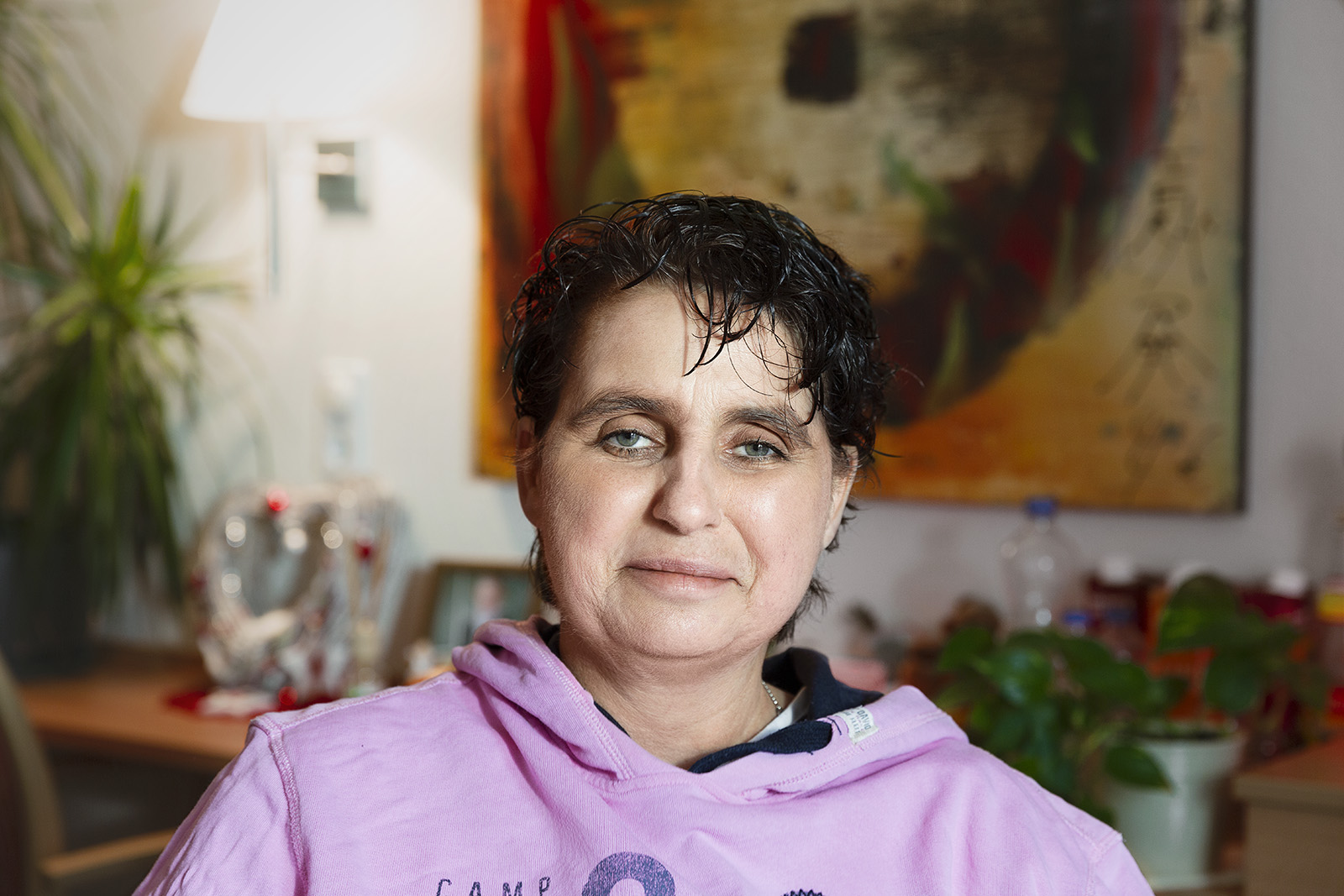
Mandy Koch
Ich habe auch das Glück, dass eine Freundin von mir hier arbeitet. Sie kommt dann mit ihrer Familie hierher und dann machen wir abends ein richtig tolles kleines Buffet hier für uns. Da gönnen wir uns richtig leckeren Käse, machen eben Bullettchen, auf was wir alles so Lust haben und dann werden wir hier eine richtig schöne, nette, kleine Weihnachtsfeier machen.
I’m also lucky that a friend of mine works here. She’ll come here with her family, and in the evening we’ll put together a really lovely little buffet for ourselves. We’ll treat ourselves to delicious cheese, make little meatballs, whatever we fancy, and then we’ll have a really nice little Christmas celebration here.
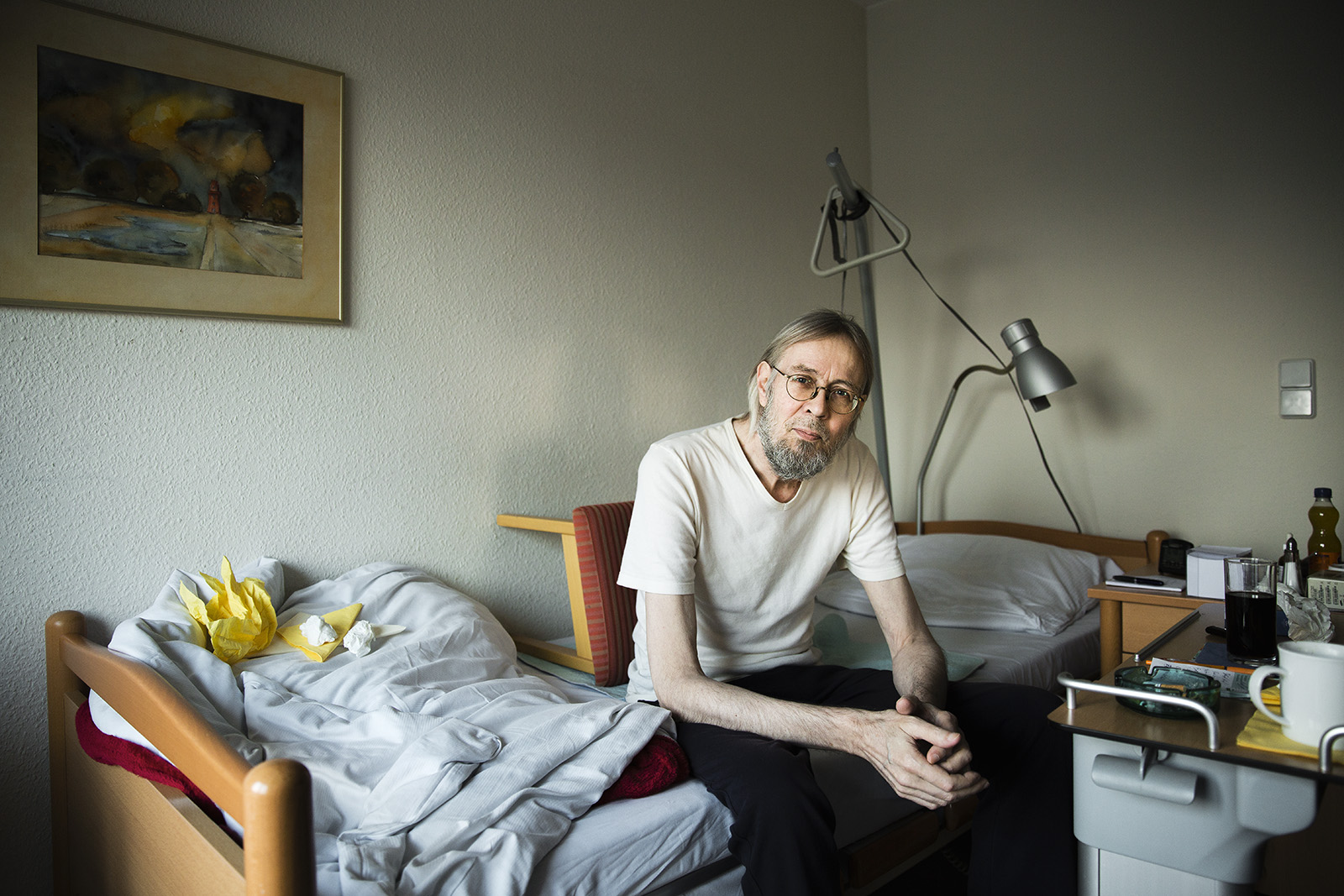
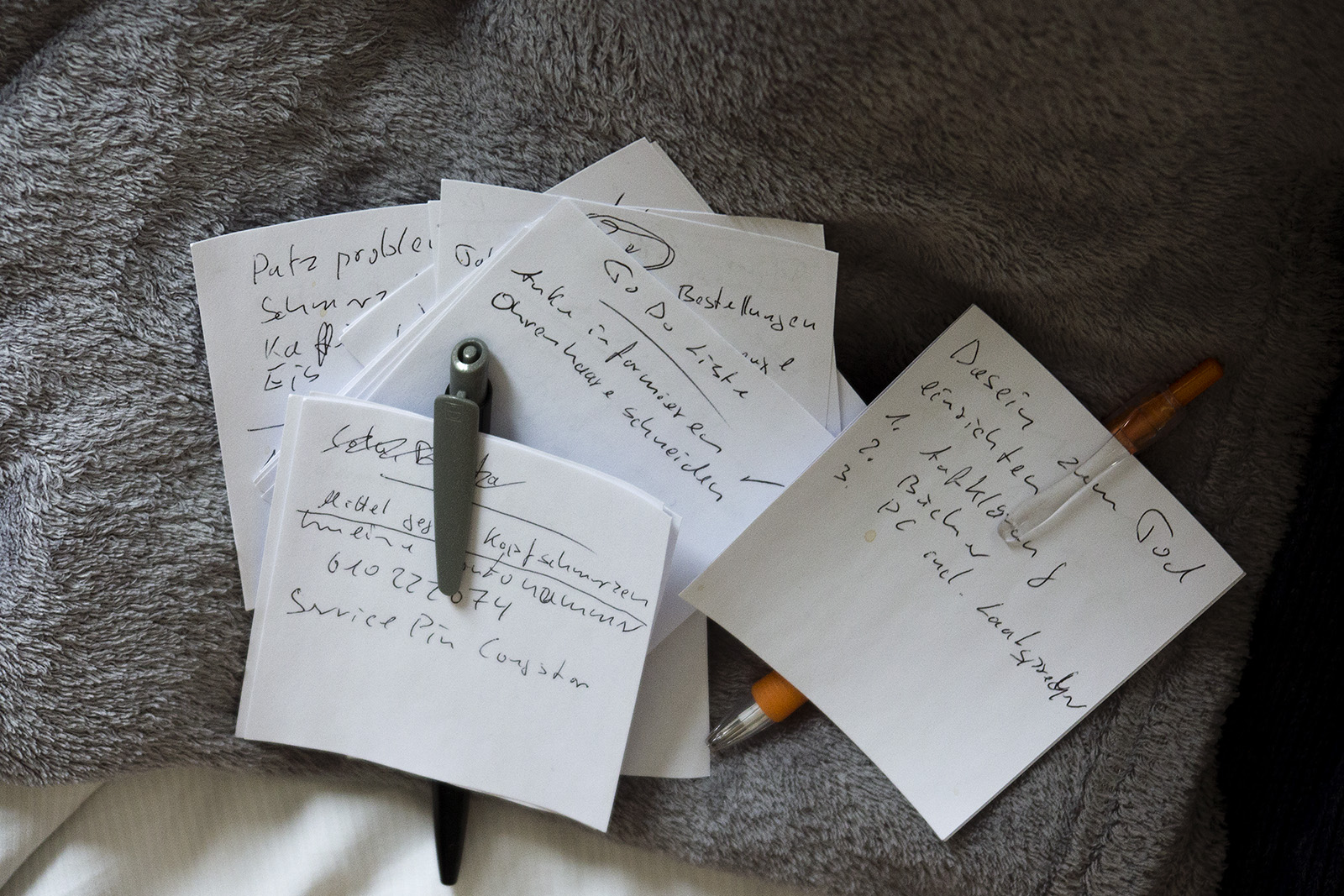
Wolf-Dieter Geissler
Mein Hauptleiden in diesem Hospiz, Leiden ist nicht das richtige Wort, die Veränderung zu meinem Leben vor dem Hospiz ist, dass ich hier eine unglaubliche Vergesslichkeit an den Tag lege. Das ist ein Schicksal, das Philosophen gar nicht mögen. Ich hab mich auch wirklich dagegen gestemmt. Jetzt leide ich wenigstens nicht darunter, dass ich vergesslich bin, sondern ich bin nur noch vergesslich.
My main affliction in this hospice — affliction isn’t the right word — the change from my life before the hospice is that I’m incredibly forgetful here. That’s a fate philosophers don’t like at all. I really resisted it. At least now I no longer suffer because I’m forgetful. I’m just forgetful.
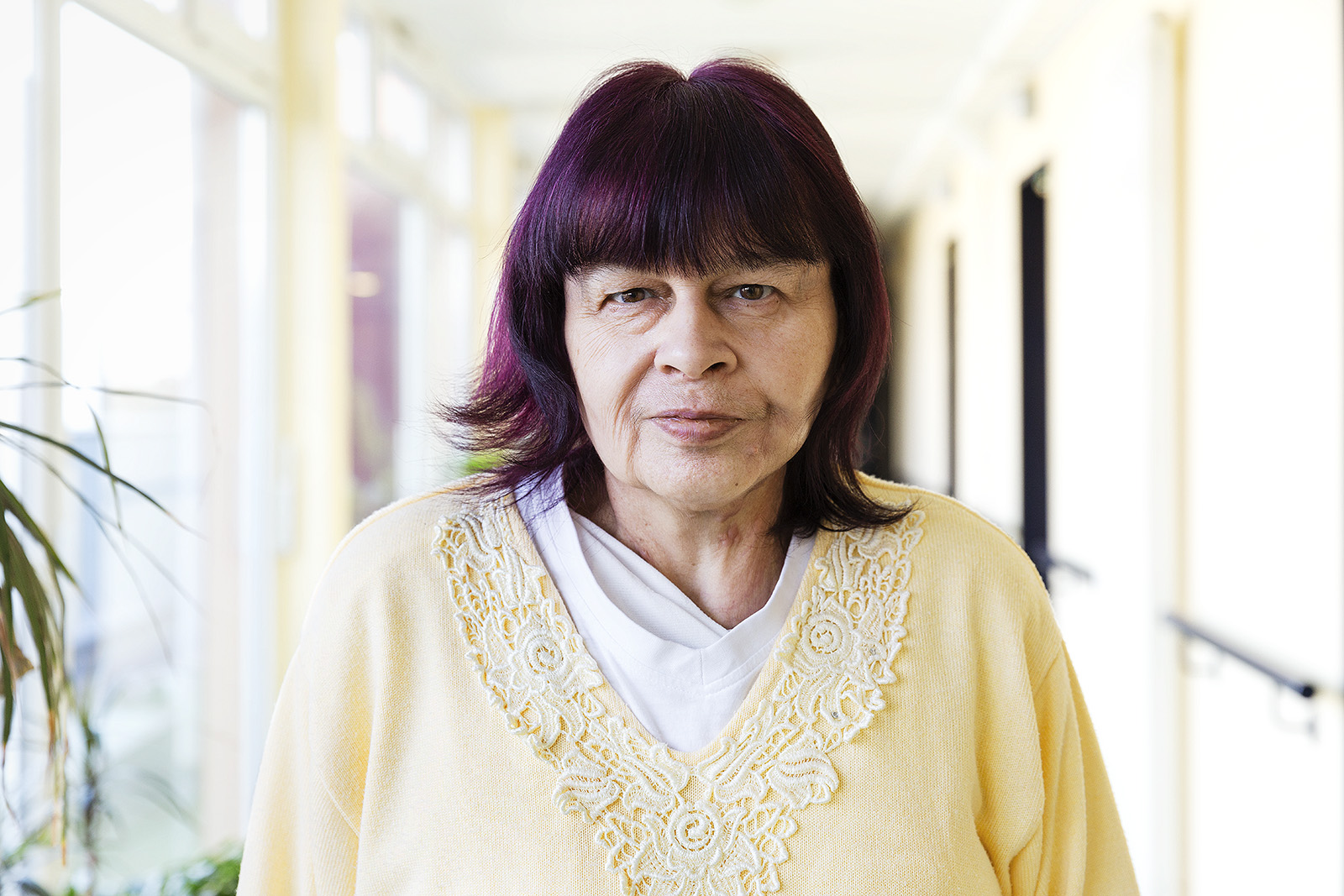
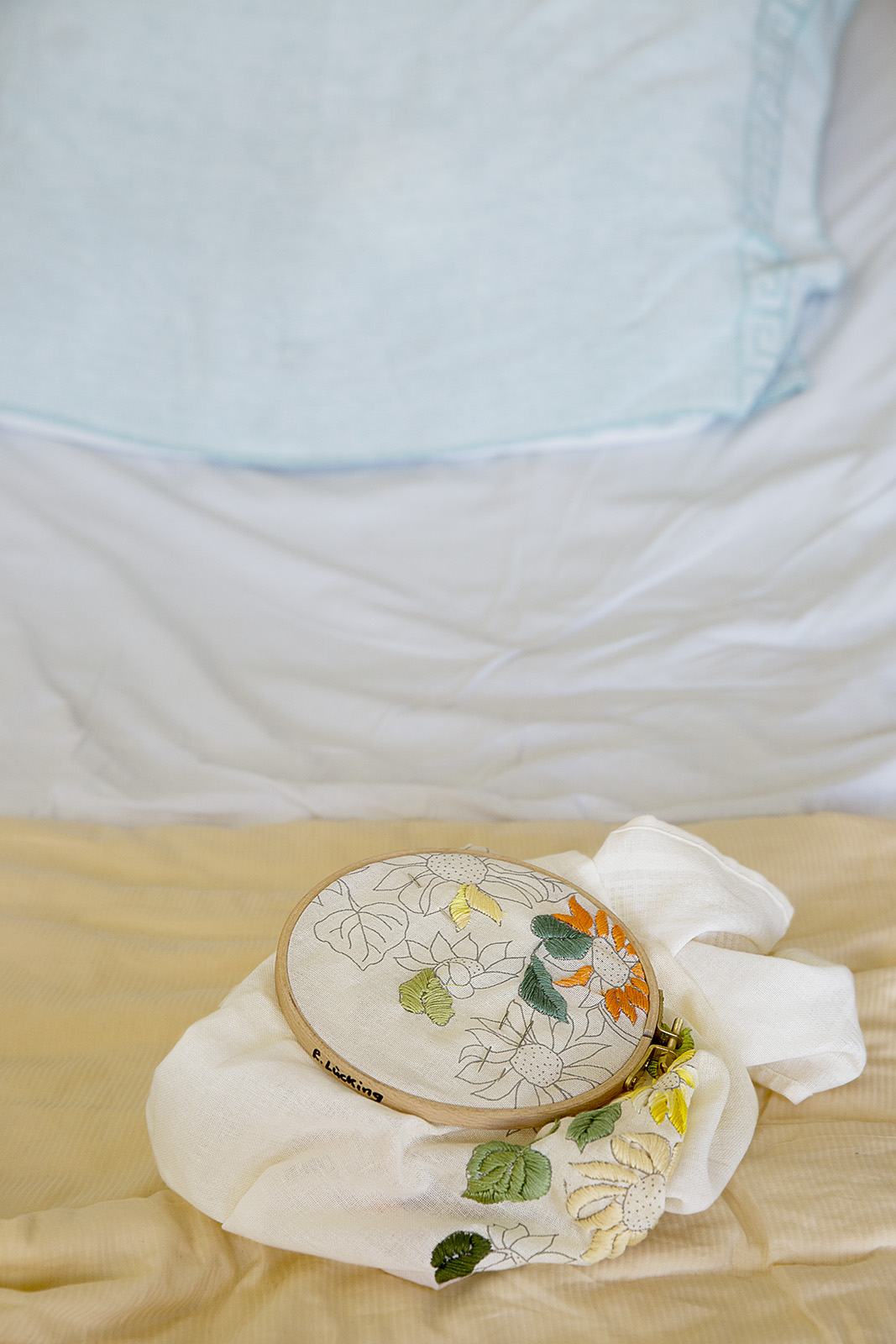
Brigitte Germann
Heute Abend kriege ich Besuch, mein Freund kommt mit seiner Betreuerin, morgen kommen meine Geschwister. Ich habe jeden Tag Besuch, geht wie in einem Taubenschlag, ich habe den meisten Besuch von allen. Da kann es mir noch so dreckig gehen, da sage ich nicht ab.
I’m having visitors this evening. My boyfriend is coming with his support worker, and tomorrow my siblings are coming. I have visitors every day. It’s like a dovecote, people coming and going. I have more visitors than anyone. No matter how awful I feel, I don’t cancel.
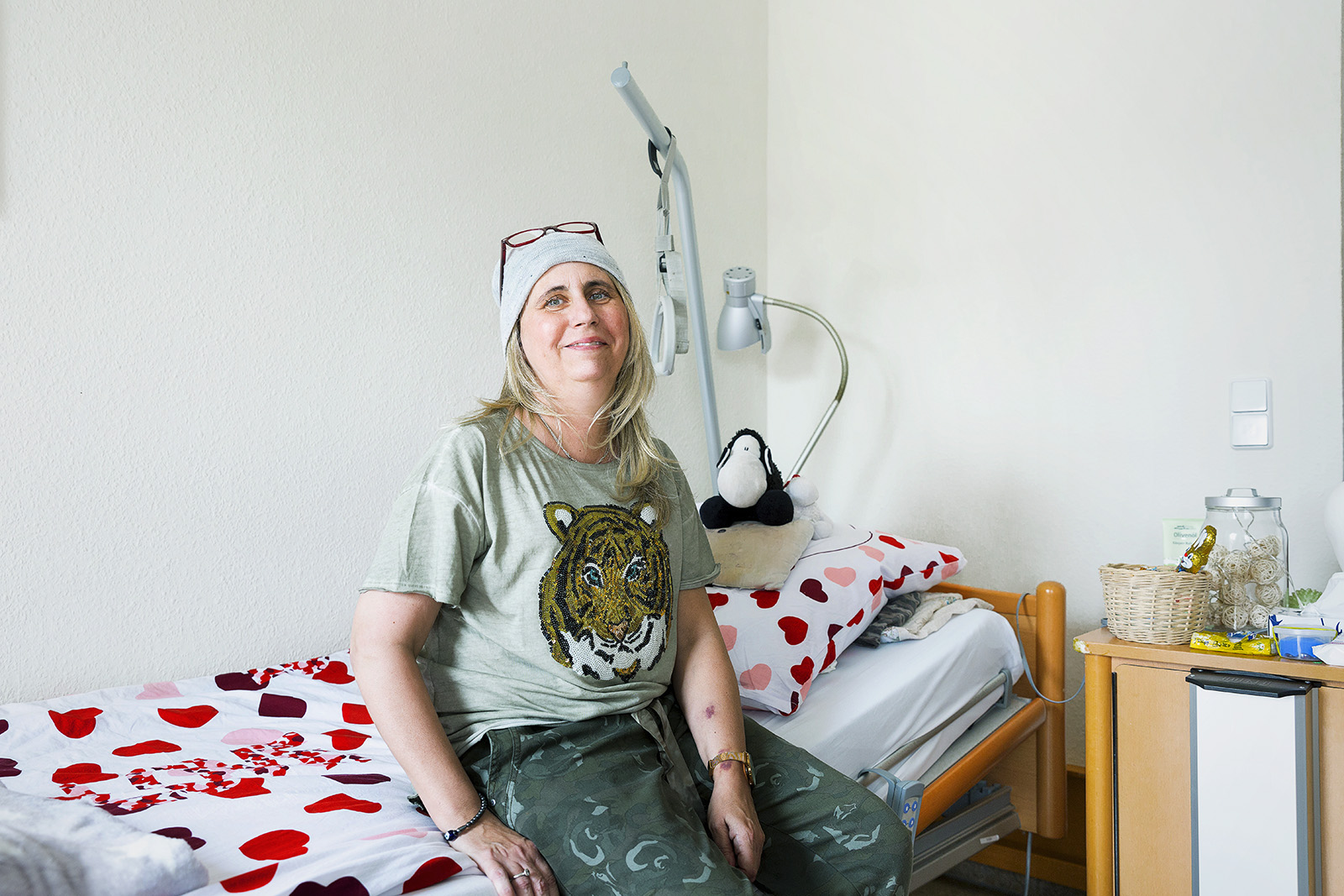
Andrea Jeschkeit-Engelhardt
Dass ich nochmal die Zeit habe, also einige Sachen, die ich gerne machen möchte mit meinen Liebsten, die noch am Leben sind, das gibt es ja, da hat sich meine Mama darum gekümmert – „Wünsche wagen“. So eine Sache, die man gerne machen möchte, dass die sich erfüllen. Ich kann nicht mehr richtig sprechen. Manchmal, auch mitten im Satz, alles weg. Fällt mir eventuell nochmal ein oder gar nicht mehr.
Und das ist eben meine Sorge, später, weiß nicht wann, gar nichts mehr mitzubekommen, das möchte ich eigentlich nicht erleben, aber das kann man sich nicht aussuchen.
To have time again for a few things I’d like to do with the people I love who are still alive — there’s a way to do that. My mum arranged it: ‘Wünsche wagen’. Something you’d really like to do, and they make it happen. I can’t speak properly any more. Sometimes, even in the middle of a sentence, everything’s gone. It might come back to me later, or not at all.
And that’s what worries me: later, I don’t know when, no longer being aware of anything. I don’t really want to experience that, but you don’t get to choose.
Anni Gembus
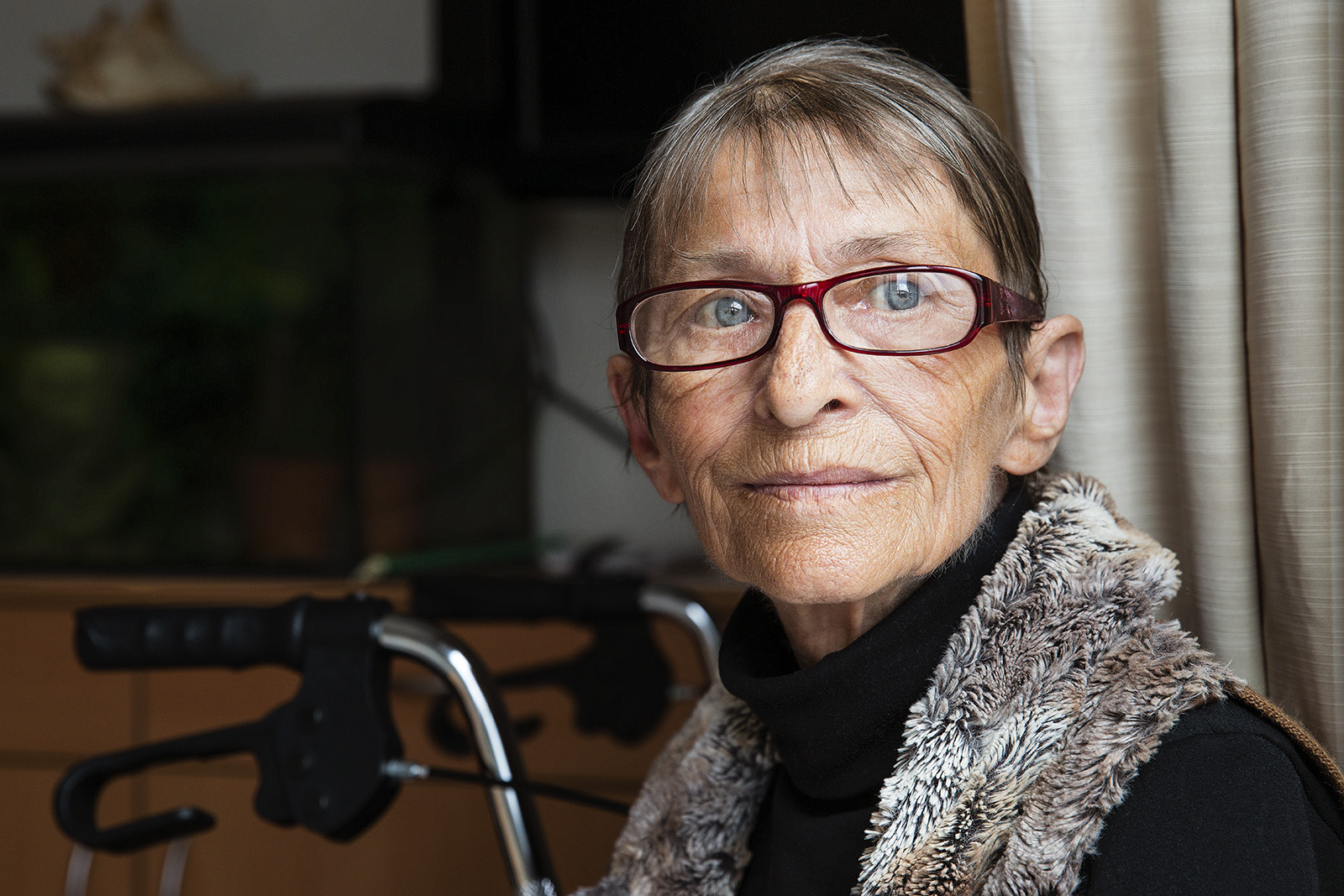
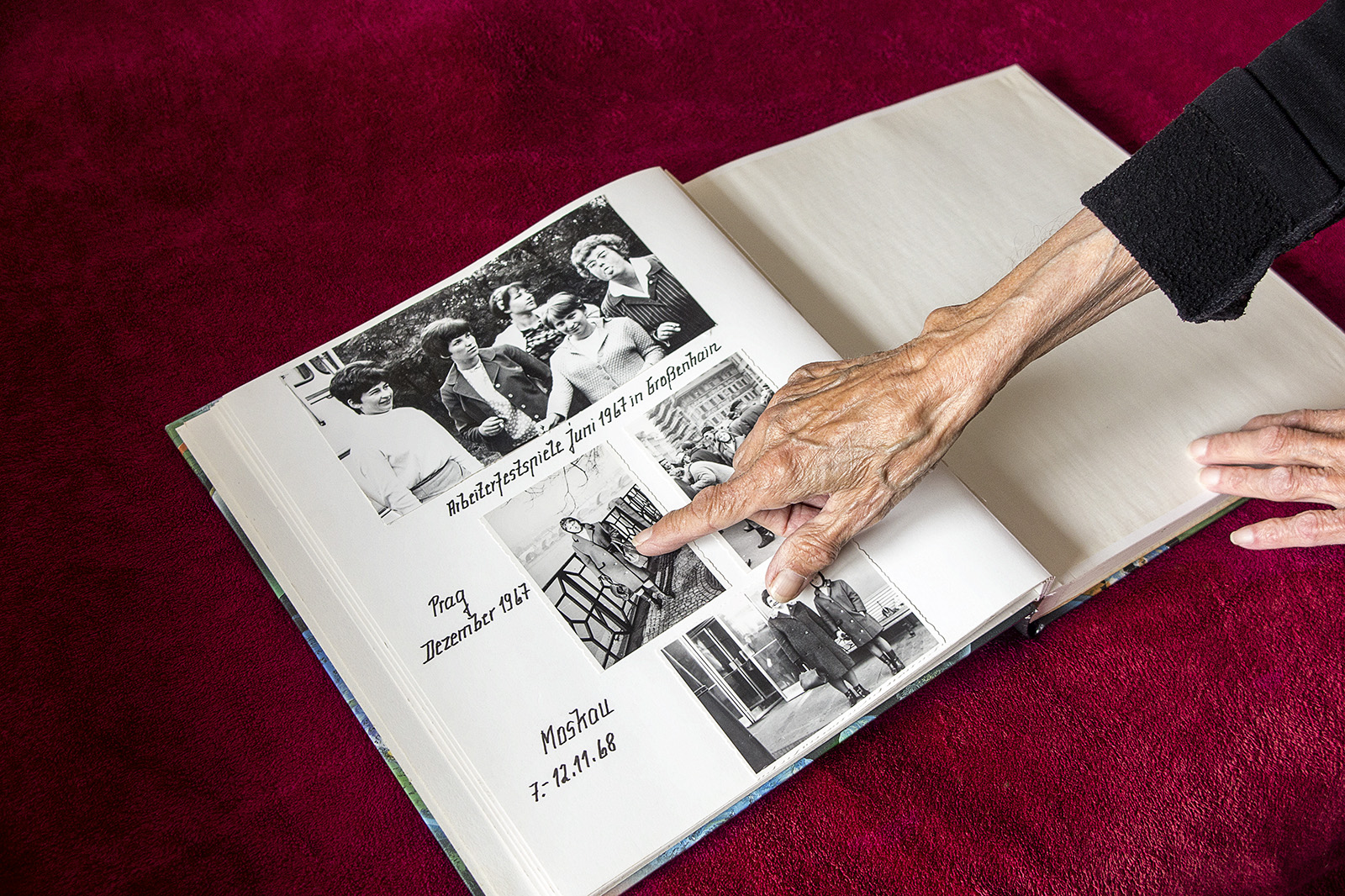
Ich hab jetzt hier so ein Aquarium, hab meine Fröschchen von zu Hause mitbringen lassen, um eben auch ein bisschen Gesellschaft zu haben. Meine Frösche, das ist mir sehr wichtig, die habe ich schon jahrelang und die möchte ich nicht missen. Ansonsten sitze ich auch viel bei schönem Wetter auf dem Balkon, träume vor mich hin, mache mir so meine Gedanken und denke auch viel jetzt über Sterben und über den Tod nach.
Vor dem Tod selbst habe ich keine Angst, ich habe nur Angst davor, dass ich eventuell noch sehr viel Schmerzen haben werde.
I have an aquarium here now. I had my little frogs brought from home so I’d have a bit of company. My frogs are very important to me. I’ve had them for years, and I wouldn’t want to be without them. Otherwise, when the weather’s nice, I spend a lot of time sitting on the balcony, daydreaming, thinking my thoughts, and now thinking a lot about dying and death too.
I’m not afraid of death itself. I’m only afraid that I might have a lot of pain.
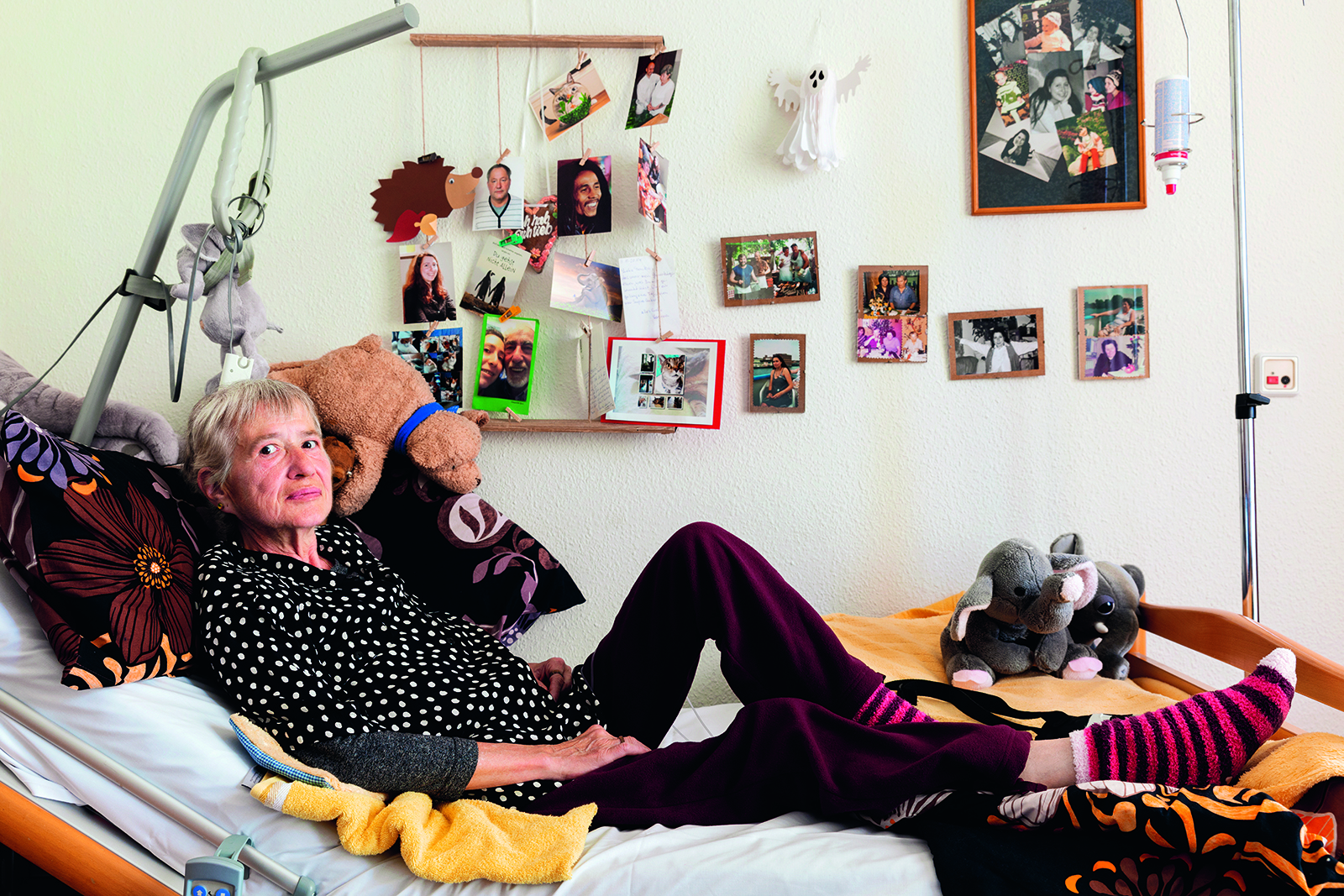
Monika Blomberg
Mein zu Hause fehlt mir, das ist klar, ich hab ja ne Wohnung und dann jetzt so alles zu verlassen, das ist wie auswandern irgendwie, wie auf der Flucht sein. Da werde ich nie wieder hinkommen und das ist natürlich unangenehm.
Obwohl man sich hier eigentlich überall wohlfühlt, es ist wirklich toll hier, also ich will da jetzt nicht Reklame für machen aber das ist wirklich toll hier. Wenn man jetzt nicht wüsste, dass man todkrank ist, könnte man denken, man ist irgendwo im Hotel.
I miss my home, of course. I have a flat, and now leaving everything behind is a bit like emigrating, like being on the run. I’ll never go back there, and that’s an unpleasant feeling, of course.
Although you really do feel comfortable everywhere here. It’s wonderful here. I don’t want to sound as if I’m advertising it, but it really is wonderful. If you didn’t know you were terminally ill, you could think you were staying in a hotel somewhere.
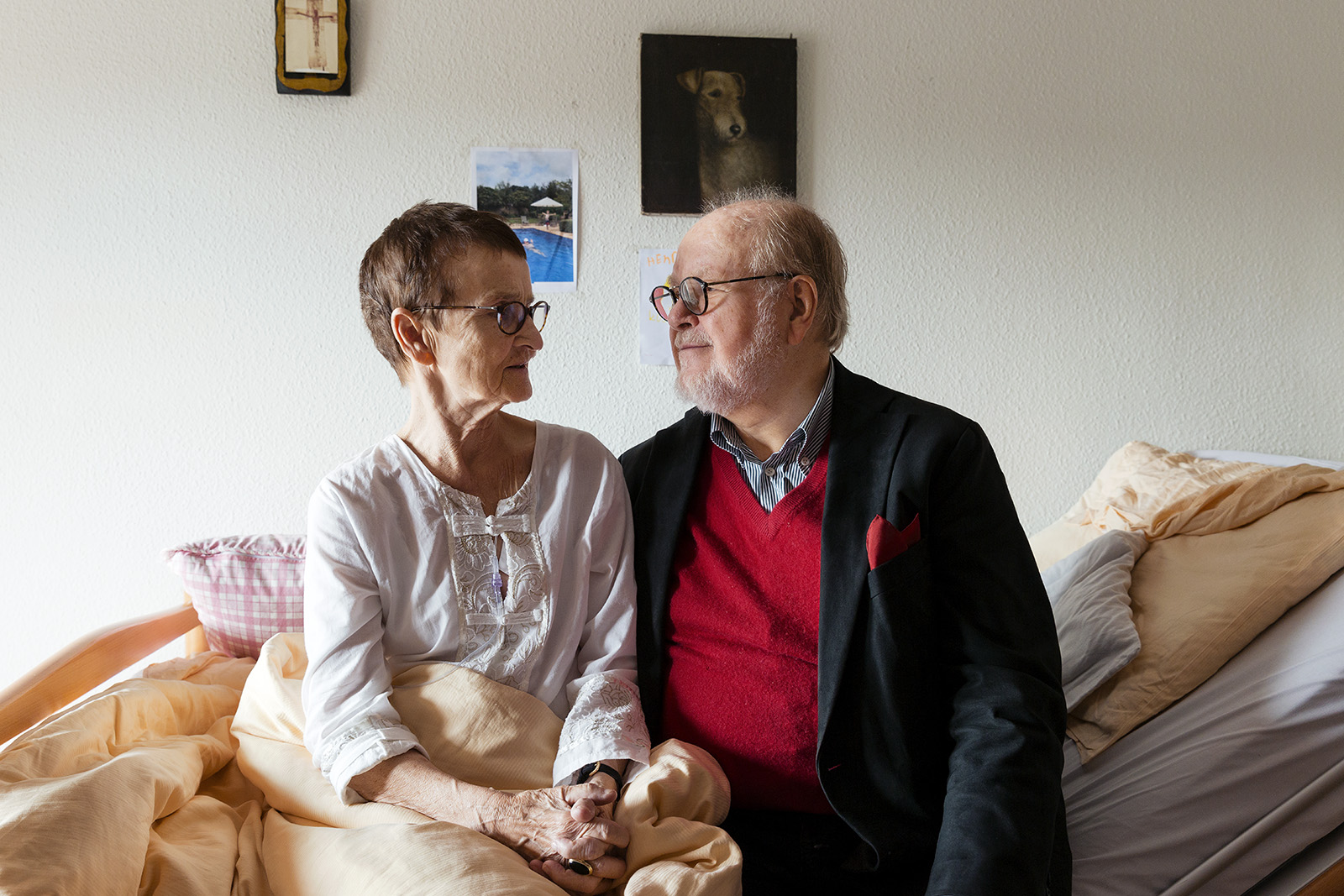
Dagmar Just mit ihrem Mannwith her husband
„Wir setzen uns mit Tränen nieder“, ich hab die auch hier gespeichert und noch Arioso, das ist ein ganz bekanntes Stück am Ende, so ein ganz zartes Ding zum Abschluss, wenn Sie alle weggehen. Und am Grab gibt’s dann noch einen Popsong von John Lennon. Früher machte man doch Beerdigungen mit Satchmo, es wurde getrommelt und gefeiert und gelacht und getanzt und wie man so aus New Orleans kennt. Und so möchte ich das dann ganz gerne irgendwie.
‘Wir setzen uns mit Tränen nieder’ — I have that saved here too — and Arioso as well. It’s a very well-known piece at the end, something very gentle to finish with, as everyone leaves. And at the graveside there’ll be a pop song by John Lennon. They used to have funerals with Satchmo, with drumming and celebrating and laughing and dancing, the way you know it from New Orleans. And that’s something like how I’d like it to be.
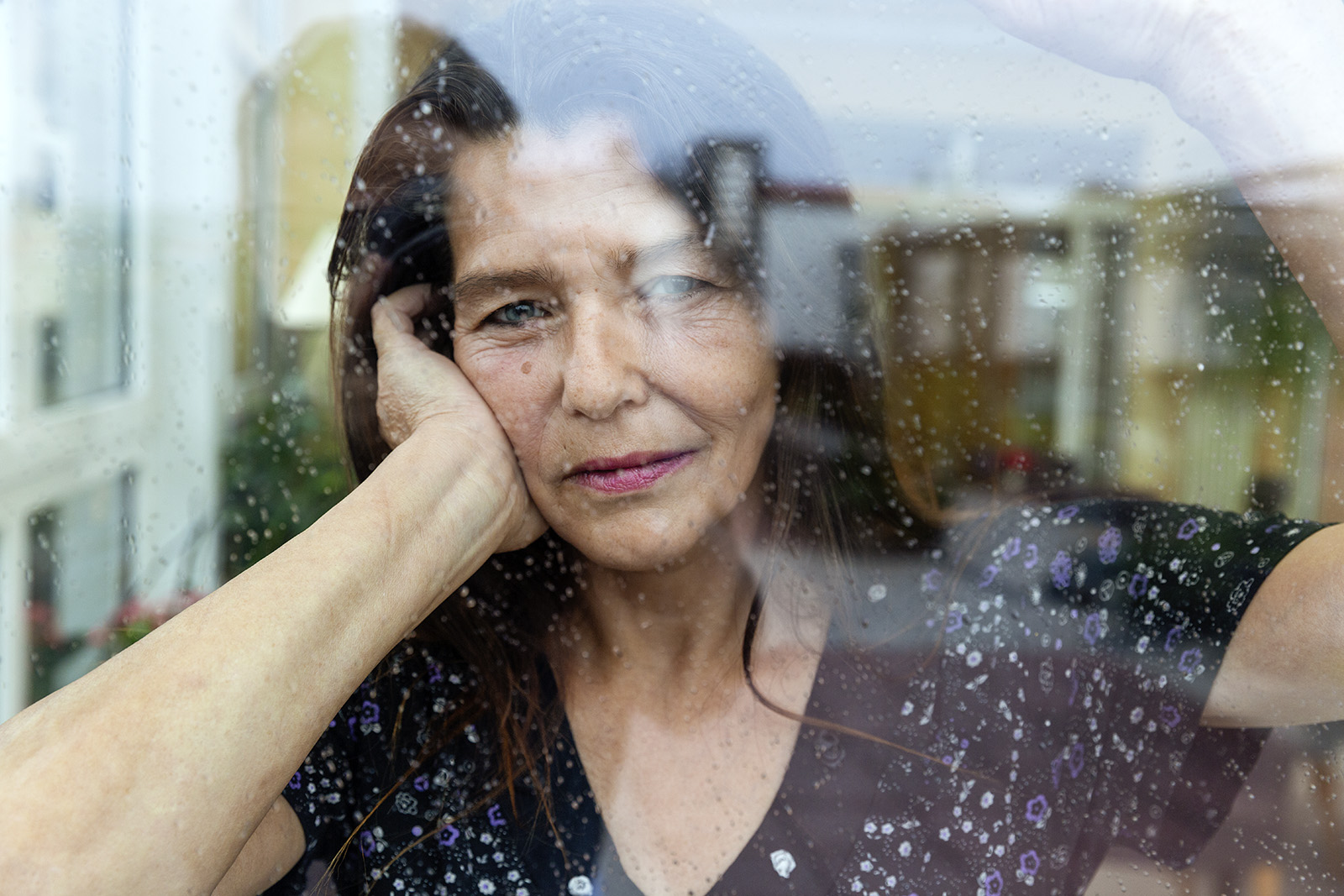
Ruth Mircowitsch
Also der ist ziemlich groß, der Tumor und sie konnten nicht alles wegmachen. Und dann haben sie mir 2 Ausgänge gemacht, also links ein Stoma für Stuhlgang und rechts der Ausgang für das Kleine. Das ist für mich erstmal nicht leicht damit zu leben. […] Ich wollte gleich sterben, weil ich hab mir nicht vorstellen können, mit zwei so Dingern an mir zu leben.
The tumour is quite large, and they couldn’t remove all of it. Then they gave me two openings: a stoma on the left for bowel movements and an outlet on the right for urine. At first it isn’t easy for me to live with that. […] I wanted to die straight away, because I couldn’t imagine living with two things like that attached to me.
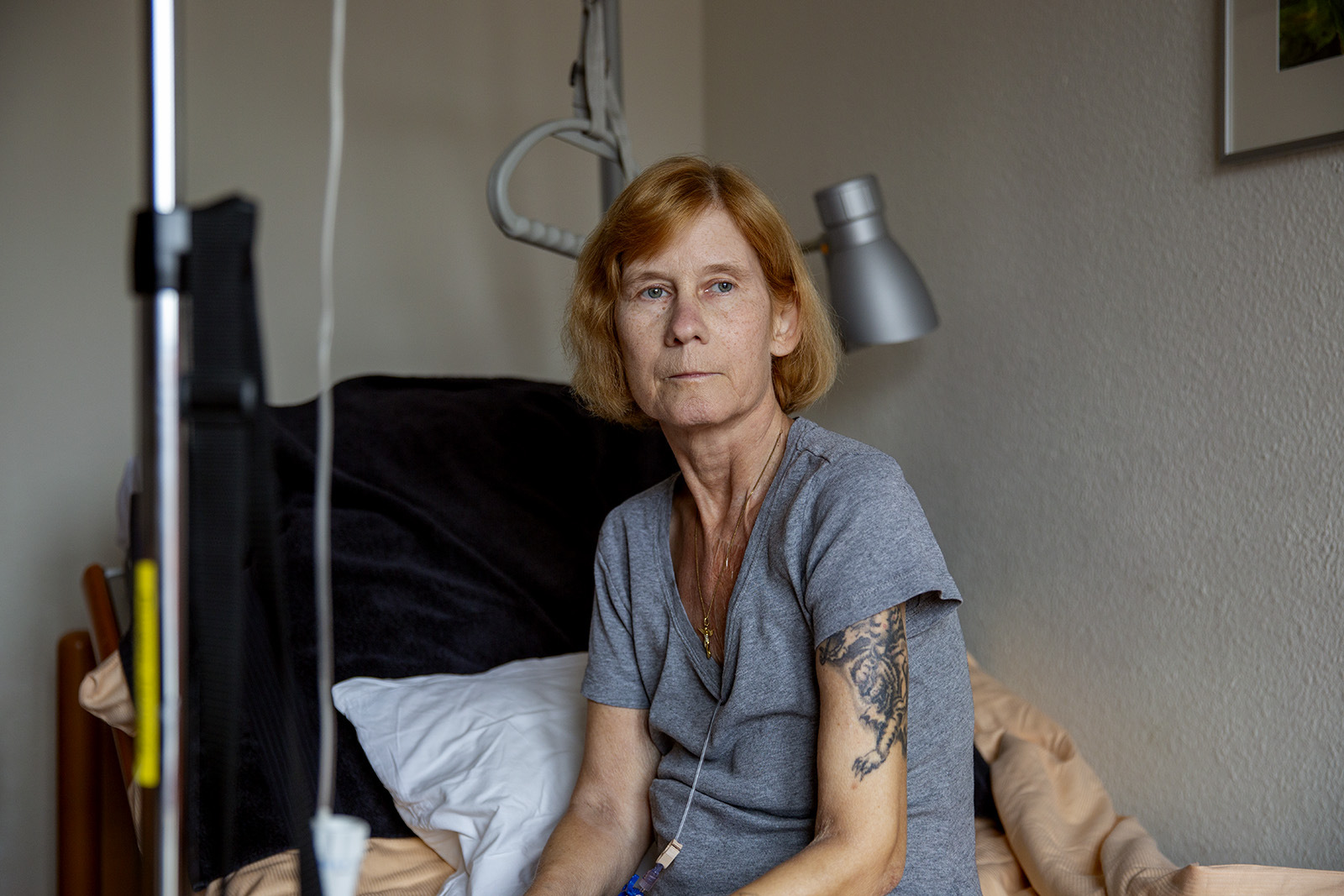
Angelika Ahrens
Mein Mann, der ist zu Hause, zweimal war er hier, der kann das nicht. Nee, dreimal war er hier. Meine Tochter hat ihm was gesagt, dass ich mich ja freuen würde und da hat er gesagt, er weiß, das ich es hier gut habe und dann ist gut für ihn. Er kann es nicht, ist trotzdem Krankenhaus für ihn. Mein Mann, wir sind alle 5 Stunden am telefonieren, gibt zwar nichts mehr zu reden, Mittagessen, wie geht es dir, was hast du heute gemacht? Das ist natürlich sehr übersichtlich.
Das ist nicht einfach, […] mein Mann lässt sich auch nicht wirklich drauf ein.
My husband is at home. He’s been here twice. He can’t cope with it. No, three times. My daughter told him I’d be pleased to see him, and he said he knows I’m well looked after here, and that’s enough for him. He can’t do it. To him it’s still a hospital. My husband and I talk on the phone every five hours. There isn’t much left to talk about: lunch, how are you, what did you do today? It’s a very small world, of course.
It isn’t easy. […] My husband doesn’t really engage with it either.
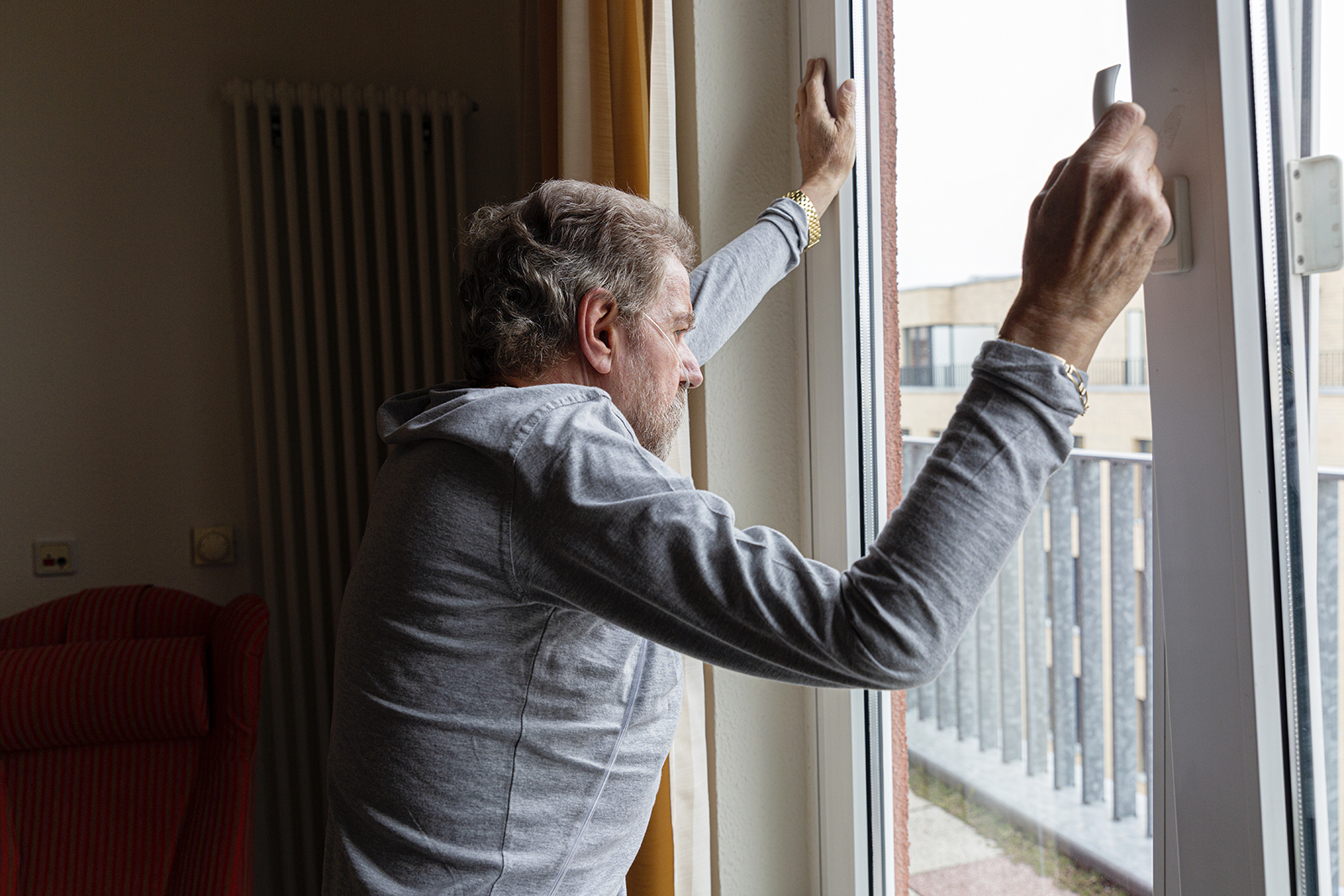
Udo Koch
So schnell wie möglich die Scheiße hinter mich kriegen und dann ist gut!
Get this shit over with as quickly as possible, and then that’s that!
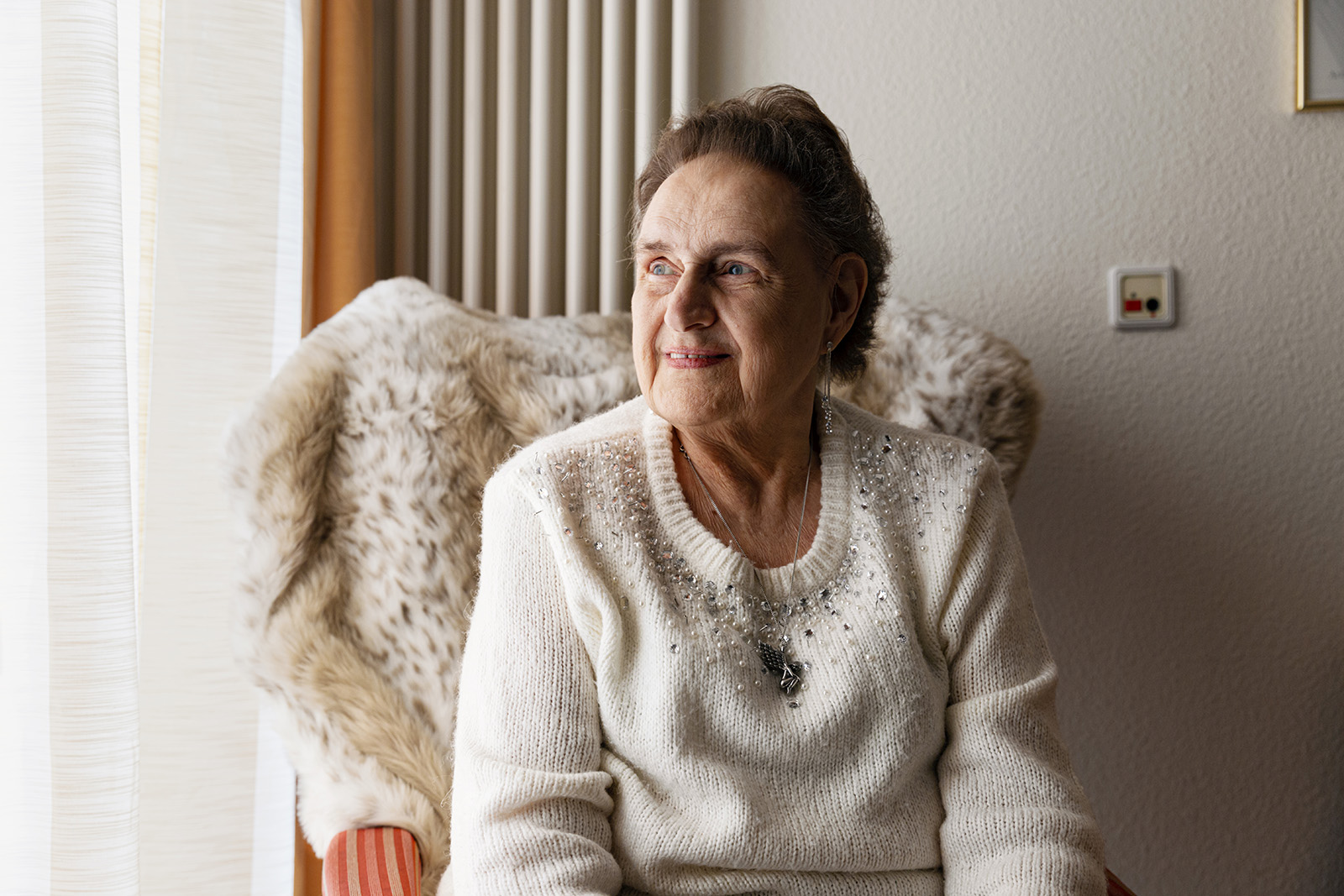
Marie-Luise Giseler
Ich bin wirklich dankbar und aufrichtig dankbar, wenn ich noch ein paar Jährchen, ein paar Jährchen, ich will ja nicht unverschämt sein, wenn ich ein paar Monate leben darf, darüber würde ich mich freuen. Vorgestern oder so, das tut mich immer so ein bisschen schockieren, da kamen die wieder mit einem Sarg hier lang, ach Gott, das schockiert, das glauben Sie. Dann gehen Sie ganz leise wieder raus. Na ja klar, die Leute müssen weggebracht werden, aber es ist kein schöner Anblick.
I really am grateful, sincerely grateful, if I can have a few more years, a few more years — I don’t want to ask too much — if I can live a few more months, I’d be happy about that. The day before yesterday or so, they came past here with a coffin again. That always shocks me a little. Oh God, it really does, believe me. Then they go out again very quietly. Well, of course people have to be taken away, but it isn’t a pleasant sight.
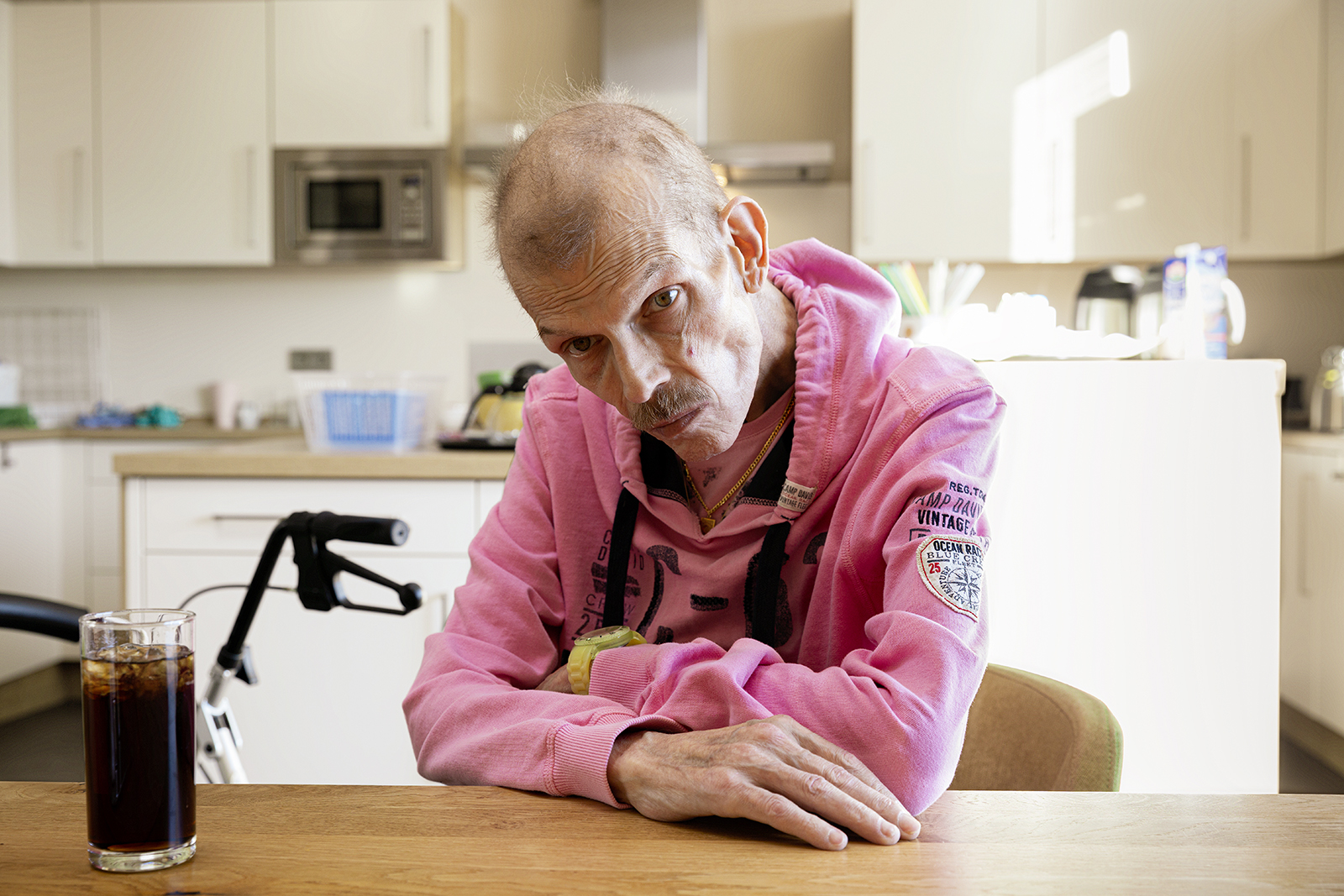
Jörg Sperling
Ich hab jetzt ein Loch in der Lunge, woher auch immer, und da haben sie gesagt, ich soll ins Hospiz, ihre Möglichkeiten sind erschöpft in der Klinik. Und hier bin ich noch unter Beobachtung und mein Ziel ist aber halt, wieder ins Leben zu treten und wieder ganz normal zu leben, mit der Krankheit natürlich. […] Und manchmal vergesse ich sogar, dass ich krank bin, aber das ist ganz selten, 2 Tage im Jahr vielleicht.
Wenn ich morgens aufwache, dann warte ich immer bis der Körper auffährt, und dann kommt das, dann kommt das, und manchmal gibts einen Tag, da warte ich dann, na mal sehen, was heute wieder anders ist, da kommt gar nichts, da tut nichts weh, oh das ist dann geil, aber das ist ganz selten.
Now I have a hole in my lung, whatever caused it, and they told me to go to a hospice. The hospital had exhausted its options. Here I’m still being monitored, but my aim is to get back into life and live normally again, with the illness, of course. […] Sometimes I even forget that I’m ill, but that’s very rare. Maybe two days a year.
When I wake up in the morning, I always wait for my body to start up. Then this happens, then that. Sometimes there’s a day when I wait and think, let’s see what’s different today, and nothing happens. Nothing hurts. Oh, that’s fantastic, but it’s very rare.
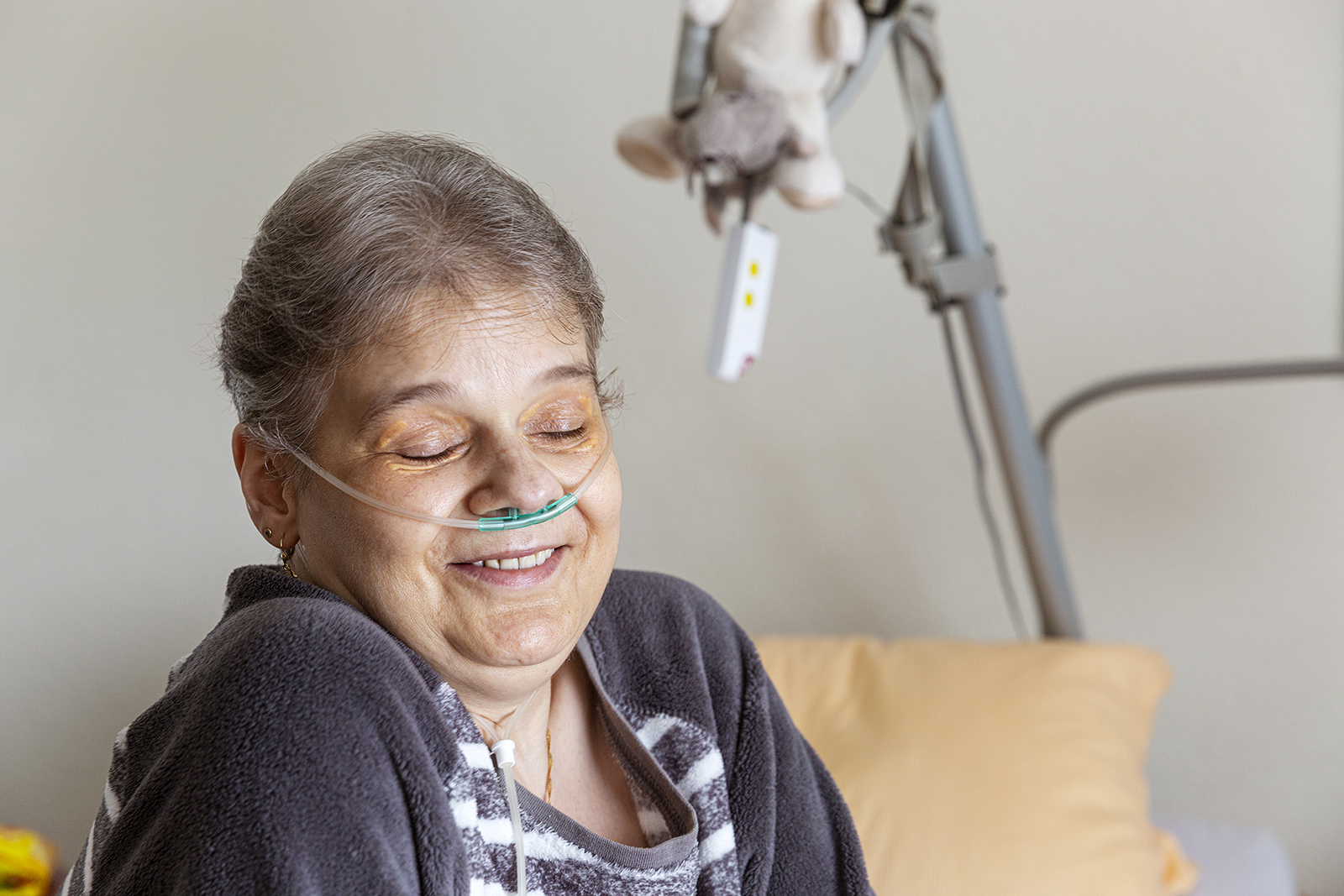
Burgit Cohrs
Ich vermisse am meisten ins Olympiastadion zu gehen, das vermisse ich wirklich am meisten. Wir haben den ersten Rollstuhlfahrer Fanclub gegründet, bei Hertha BSC, da gab es nie einen.
Das hat so ein Spaß gemacht alles, hatten auch Mitspracherecht beim Stadionbau, das haben wir uns eingeklagt, das wir unsere Plätze selber wählen können und nicht einfach, sonst wenn man irgendwo ins Stadion geht, geht man immer bei die Gegnerischen, immer bei den Rollis, alle werden sie immer zusammengepfercht, aber bei uns nicht. Da sind die gegnerischen Fans auch bei ihre Leute und wir bei unsere Leute, mitten in der Fankurve und das ist bei den anderen Stadien nicht.
What I miss most is going to the Olympic Stadium. That really is what I miss most. We founded the first fan club for wheelchair users at Hertha BSC. There had never been one.
It was all so much fun. We even had a say in the stadium construction. We went to court for the right to choose our own seats. Elsewhere, wheelchair users are all squeezed together, even with the opposing fans. Not with us. Their fans sit with their people and we sit with ours, right in the middle of the supporters’ stand. Other stadiums aren’t like that.